kako Carbon Plate Running Shoe Claim Check
kako Carbon Plate Running Shoe Claim Check
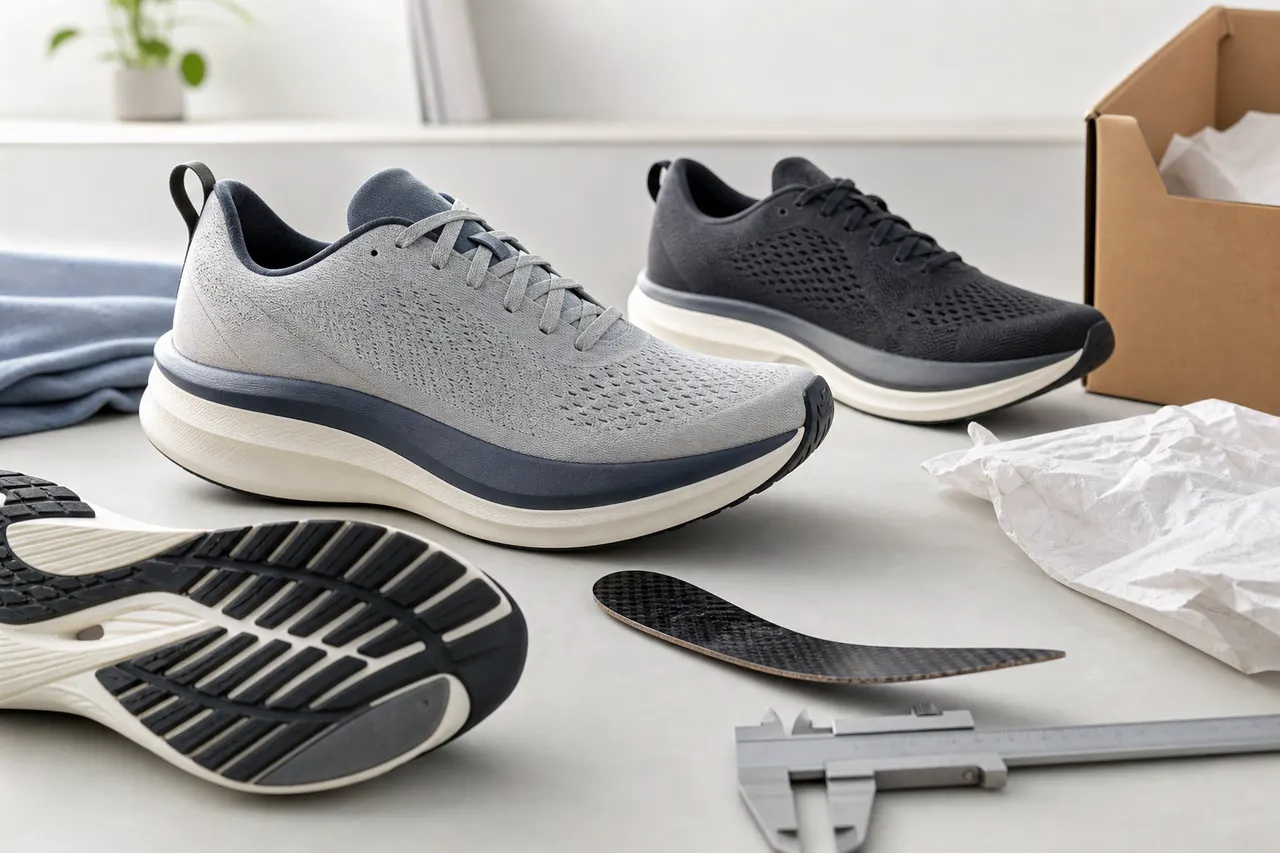
Carbon plate running shoe product titles often combine "carbon plate," "rebound," and "racing" together, but these terms correspond to structure, material, and usage scenarios respectively, and cannot prove each other. This article provides a pre-order verification method suitable for the kako-spreadsheets.org product discovery workflow: first go from the product leads in the spreadsheet to the corresponding product page, then separately record promotional language, specification fields, image evidence, and items to be confirmed.
This article can help you judge whether the existing evidence is sufficient to support the claim of "contains a carbon plate" and its structural description, and decide whether to continue asking questions, wait for quality inspection photos, or give up the order. It cannot confirm the plate material, running performance, durability, authenticity, or the current inventory of a specific seller based solely on appearance.
Verification date: August 30, 2026. Since no accessible specific product page, specification document, seller response, or physical quality inspection photo was provided this time, the article does not make current factual determinations about the price, inventory, materials, and performance of any specific shoe model.
First clarify the carbon plate running shoe claims to be verified
The first step is not to look for more praise words, but to copy the original statement to be verified into the record completely. For example, "full-length carbon plate racing running shoes" contains at least three independent claims:
A plate-like structure indeed exists inside the shoe.
The plate is made of carbon fiber composite material, not ordinary plastic sheets or other materials.
The plate coverage meets the usual meaning of "full-length."
The last, cushioning, stability, and durability are suitable for the racing scenario stated in the claim.
When finding a candidate product on kako-spreadsheets.org, you should keep the product name, product number, or other identifiers from the spreadsheet for reference, and then check whether they point to the same product. The spreadsheet is suitable for filtering and organizing candidates, but it cannot automatically replace the seller's product page, material description, or warehouse quality inspection evidence. 🔎
If the candidate row and the product page cannot be matched in terms of name, colorway, item number, or version, you should stop comparing first. Different batches or similar-looking shoe models may use different midsoles and plates; applying data from other versions will directly break the conclusion.
Distinguish product page claims, specification fields, and observable evidence
It is recommended to divide information into four layers to avoid writing the seller's self-statements as confirmed facts.
Evidence level | What can be recorded | What cannot be directly confirmed from it |
|---|---|---|
Product page claims | Title, detail text, seller's labeled plate and intended use | Whether the claim is true, whether it applies to the current batch |
Specification fields | Size chart, weight, heel and forefoot thickness, material column | Dynamic rebound, propulsion efficiency, and actual lifespan |
Observable evidence | Outsole contour, bending position, cross-section diagram, labels and appearance in QC photos | Plate composition and internal continuity wrapped by the midsole |
Supplementary documents | Material descriptions, structural diagrams, test documents and their applicable models | Performance of models, batches, or test conditions not covered |
Screenshots should also preserve the page date, product identifier, and the location of the claim. Only screenshotting the two characters "carbon plate" without keeping the context makes it impossible to judge whether it describes the entire shoe, the insole, the decorative part, or another version.
Check the plate name, position, and full-length or half-length expression
"Carbon plate" is first a material claim. If the page only says "plate," "propulsion plate," "stabilizing plate," or "plate" in English, you cannot upgrade it to a carbon fiber plate yourself. The presence of "carbon" in the name is not enough; you also need to confirm that it is describing the plate composition, not the colorway, texture, or series name.
Then check the position and coverage:
Look for a structural diagram or cross-section diagram that corresponds to the current model.
Confirm that the plate-like component is located inside the midsole, at the bottom, or near the insole.
Check whether the text and images clearly state that it extends from heel to forefoot, or only covers the arch or forefoot.
Compare the expressions in the title, specification column, and detail images for consistency.
If "full-length," "half-length," and "forefoot propulsion plate" are mixed on the same page, mark it as a conflict and do not choose the most favorable interpretation for the seller.
Structural diagrams can only prove what design the page displays; unless they have clear model, version, and source correspondence, they cannot alone prove that the received product uses the same structure. 🧩
Use sole bending point and cross-section diagram to check structural consistency
Sole bending tests can reveal obvious contradictions but cannot identify materials. If the product claims an internal hard full-length plate, but the display video shows the shoe body can easily fold at the arch, this deserves requiring an explanation; however, bending performance is also affected by midsole grooves, shoe size, test force, temperature, and filming method.
When checking images or videos, you can observe in order:
Does the bending mainly occur in the forefoot metatarsophalangeal area, or can the shoe midfoot also fold easily?
Are the bending positions consistent between left and right shoes and in different frames?
Could the outsole grooves dominate the bending rather than the plate itself?
Are the plate curve, thickness position, and coverage in the cross-section diagram consistent front and back?
Does the colorway, outsole pattern, and item number of the displayed object match the version you intend to purchase?
Warehouse QC photos are usually more suitable for confirming color, size label, appearance defects, outsole style, and whether the packaging matches the order. Ordinary appearance photos cannot see the internal structure wrapped by foam, so you should not write "seems no problem in the photos" as "confirmed full-length carbon plate." If additional photos are needed, you should request clear shots of the shoebox label, tongue size tag, full outsole, and both medial and lateral sides of the shoes, while avoiding asking the warehouse to damage the product.
Judge what evidence is still missing for midsole thickness and rebound description
"Thick sole" can be checked through a clear measurement method, but "high rebound" is not a conclusion that can be proved by a single press photo. 📏
Thickness data should at least specify the measurement position, whether the insole is included, shoe size, and measuring tool. Forefoot and heel thickness can also be used to calculate the drop, but only when both data use the same benchmark. Direct comparison of millimeter values across sizes can also be misleading.
For descriptions such as "high rebound," "energy return," or "improves speed," you should continue to look for:
The exact name of the midsole material and its applicable model.
Reproducible test methods, sample size, and test conditions.
Data differences between new shoes and after multiple uses.
Comparison with which control shoe model or material.
Whether the test conclusion comes only from seller promotion.
When lacking this information, record it as "page claims high rebound, no verifiable performance data yet," and do not rewrite it into a certain conclusion. Finger pressing, static bending, and single-segment running footage are not sufficient to quantify energy return.
Check whether size information and racing usage scenario match
Even if the plate claim is ultimately supported, it does not mean the shoe is suitable for every runner. Whether a racing shoe can be used often depends first on size, last shape, and stability needs.
Before ordering, record your actual foot length, forefoot width on the wider side, the brand and size of running shoes you usually wear, and whether you need a wide last. Then check whether the product size chart uses foot length, insole length, or internal shoe length; the three cannot be directly equated. If the chart and the product page have inconsistent size markings, confirm the current version with the seller instead of blindly choosing based on your daily size.
Usage scenarios also need to consider:
Whether the plan is for short-distance training, long-distance racing, or daily jogging.
Whether you are used to a harder sole structure with a noticeable rocker feel.
Whether higher stability is needed when turning, on wet roads, and after fatigue.
Whether route rules, sole thickness, or equipment requirements have restrictions.
Whether the size can still be returned, exchanged, or cancelled if it does not fit.
Those trying plated running shoes for the first time, with wide feet, high stability needs, or previous sports discomfort should not decide solely based on the "racing" label. Shoe selection cannot replace professional medical advice.
Sort out performance and authenticity boundaries that cannot be confirmed by images
Images can support appearance checks but cannot penetrate the midsole to verify composition, nor prove long-term performance. The following items usually require documents, reproducible tests, or post-receipt compliance inspection:
Whether the plate is indeed carbon fiber composite material.
The plate's number of layers, stiffness, geometry, and internal continuity.
The midsole material formula and actual rebound data.
Durability of the entire shoe after various mileages.
Impact on running economy, speed, or injury risk.
Brand authorization, production source, and product authenticity.
Even if the product carries a certain brand logo, it cannot be identified as authentic based solely on photos. If source, authorization, or authenticity evidence is insufficient, treat it as an unresolved purchase risk rather than bypassing judgment with vague words like "same style" or "original order." ⚠️
If QC photos show obvious wrong size, wrong color, damage, sole separation, or left-right inconsistency, you should pause subsequent shipping within the warehouse's allowed processing window and submit evidence through the order processing portal currently available on the platform. Specific return/exchange conditions, deadlines, and fees are information that changes; before acting, you must follow the current rules displayed on the order page.
Complete the claim verification record before ordering
The final record does not need to be written as a long comment, but it must make the next action clear. For each candidate product, at least save the following:
Product identifier: name and number in the spreadsheet row, and the corresponding product page version.
Original claim: original text summary of plate name, coverage, midsole material, thickness, and target scenario.
Evidence seen: what each of specification fields, structural diagrams, cross-section diagrams, size charts, and QC photos supports.
Evidence conflicts: inconsistencies among title, details, images, or different versions.
Still to be confirmed: material composition, actual weight, size benchmark, return conditions, or performance data.
Verification date: August 30, 2026; re-check price, inventory, shipping, and policy before ordering.
Decision result: continue to ask, wait for additional photos, accept risk and order, or give up this candidate.
An actionable conclusion can be written as: "Current images and specifications only support the seller's claim that the shoe has a plate-like structure, but cannot confirm the plate composition and full-length coverage; the size benchmark is also not stated, so first ask for structural data corresponding to the model and size measurement method, and do not order until a consistent answer is obtained."
This method mainly saves not a fixed amount of money, but the probability of wrong size, wrong version, and paying for unverified performance claims. Its added cost is the time for verification, and additional photos or inquiries may still not eliminate internal structure risks. It is most suitable for buyers who value size, usage, and evidence consistency; if you need definite material identification, authenticity conclusion, or quantifiable racing benefits, and the seller cannot provide verifiable data, it is not recommended to purchase based solely on product images. ✅
FAQ for agent platform shopping
1. What should I look at when reviewing QC photos on kako-spreadsheets.org?
When checking quality control images on kako-spreadsheets.org, pay attention to the particular traits of the product you ordered. In the case of shoes, examine a few important spots—the toe, heel, and tongue—to verify stitching, overall shape, and tongue thickness, which helps you judge whether the pair is well made. For garments, inspect details such as the neck label, logo stitching, fabric type, and whether the collar and cuffs lie flat.
2. Which product categories are listed on kako-spreadsheets.org?
The spreadsheet available on kako-spreadsheets.org includes shoes, clothing, bags, accessories, jerseys, perfumes, hats, scarves, belts, and many household daily-use products.
3. How do I find an item I want to purchase on kako-spreadsheets.org?
You may search using a single keyword or navigate to the category page, where products are also sorted by brand. Using longer search phrases generally gives fewer but more accurate results than shorter ones.
For instance, you could look up "Air Force 1 White," "sneakers," or just "Air Force 1."
4. What is the purpose of using the kako-spreadsheets.org spreadsheet?
Since agent platforms usually do not show products directly, you need a spreadsheet like the one on kako-spreadsheets.org to look up items you want and obtain their purchase links. Another option is to ask for help on Reddit or Discord—the products suggested there are often very good, but the buying process tends to be slow. These spreadsheets are generally built over time by collecting information from such sources.
Browse our latest products and find your next favorite item.